
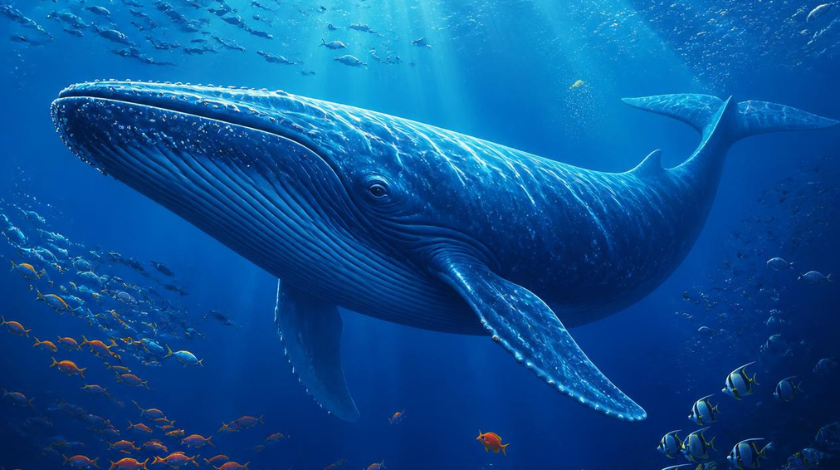
When I first learned about the blue whale as a kid, I couldn’t wrap my head around something so massive actually existing. I mean, we talk about dinosaurs being huge, but here’s an animal that’s alive right now, swimming in our oceans. The blue whale is the biggest animal in the world, and honestly, learning about this creature has been one of the most humbling experiences for understanding just how vast our planet really is.
https://www.example.com/?N2GwYZ-458470
The Blue Whale: Earth’s Undisputed Largest Animal
If you’re wondering what the biggest animal in the world is, the answer is definitively the blue whale. This magnificent marine mammal holds a record that’s practically unbeatable. The blue whale is so enormous that no other animal, living or extinct in recent times, comes even close to matching its sheer size and mass.
The blue whale, scientifically known as Balaenoptera musculus, belongs to the baleen whale family. These whales are filter feeders, which means they eat by filtering water through special plates called baleen instead of having teeth. This adaptation is absolutely crucial to understanding why they can grow to such tremendous sizes. Unlike predators that need to chase and catch individual prey, blue whales can consume massive amounts of tiny krill in one feeding session. This feeding method allows them to pack on extraordinary amounts of energy, which translates into their enormous body mass.
I find it fascinating that the largest animal in the world doesn’t hunt or attack other creatures. Instead, it peacefully filters billions of tiny shrimp-like organisms from the ocean water. There’s something humbling about that concept.
How Absolutely Big Is the Blue Whale?
To really understand what makes the blue whale the biggest animal in the world, you need to know the actual numbers. These creatures are hard to visualize without some context.
An adult blue whale typically reaches lengths of between 70 and 90 feet long. To put this in perspective, that’s roughly the length of three school buses parked end to end. Some exceptional specimens have been recorded at over 100 feet in length, though this is less common than it used to be before whaling reduced their populations.
The weight is where things get absolutely mind-boggling. A mature blue whale can weigh anywhere from 100 to 200 tons. That’s 200,000 kilograms or more. To help you understand this, a typical car weighs about 2 tons. So a single blue whale weighs as much as 100 cars. An African elephant, which we typically think of as massive, weighs maybe 6 or 7 tons. A blue whale is roughly 30 times heavier than an elephant. Even the heaviest land animals that have ever existed don’t come close to matching this weight.
Female blue whales are actually larger than males, which is unusual in the animal kingdom. They can reach weights exceeding 200 tons, while males typically max out around 150 tons. When a blue whale calf is born, it’s already about 25 feet long and weighs roughly 3 tons. That’s larger than most adult land animals, and it’s just a baby. The mother whale produces milk that’s about 35 percent fat, which allows the calf to gain approximately 200 pounds per day during its first year. This rapid growth rate is absolutely astounding.
Detailed Organ and Body Measurements
The sheer scale of a blue whale’s internal anatomy is something that really drives home just how massive this creature is. I’ve seen diagrams and photographs comparing human sizes to blue whale organs, and every time, it’s shocking.
The heart of a blue whale is the largest heart of any animal that has ever existed. It weighs approximately 400 pounds and is about the size of a small car. You could fit a human inside a blue whale’s heart. The heart pumps roughly 50 gallons of blood through the animal’s body with each beat. To give you some perspective, the total blood volume in a blue whale is about 36,000 liters. That’s enough to fill a substantial swimming pool.
The tongue of a blue whale can weigh as much as 4 tons. Again, that’s heavier than many adult African elephants. When the mouth is open during feeding, it can hold as much water as an Olympic-sized swimming pool. Despite this enormous mouth, the throat of a blue whale is actually quite narrow, roughly the diameter of a human throat. This means they physically cannot swallow large fish or other sizable prey, which is why they depend on krill, those tiny ocean organisms.
The baleen plates in the mouth, which filter the water, are made of the same material as human fingernails. These plates can be up to 3 feet long and there can be around 400 of them. During feeding, the whale takes in enormous mouthfuls of water containing krill, then uses its tongue to push the water out through the baleen, trapping the krill inside.
The lungs of a blue whale are equally impressive. A blue whale’s lungs can hold about 5,000 liters of air. When the whale breathes, it can replace about 90 percent of the air in its lungs with each breath, whereas humans only replace about 15 percent. This efficiency allows them to stay underwater for extended periods, typically 20 minutes, though they can hold their breath for up to 30 minutes when needed.
Blue Whale Versus Other Large Animals
Now let’s talk about how the blue whale stacks up against other large animals you might be familiar with.
Blue Whale Versus African Elephants
The African elephant is the largest land animal alive today. An adult bull elephant can weigh up to 7 tons and stand 13 feet tall. This is genuinely impressive when you consider how much space an elephant takes up and how powerful it appears. However, compared to a blue whale, an elephant is tiny. A single blue whale weighs roughly the same as 25 adult elephants. If you lined up 25 elephants in a row, they might stretch the length of a blue whale. This comparison really illustrates the scale difference between the largest sea creature and the largest land creature.
Blue Whale Versus Other Whale Species
Other whale species are also enormous, but they’re still considerably smaller than the blue whale. The fin whale, which is the second largest animal in the world, reaches lengths of about 70 to 75 feet and weighs around 40 to 50 tons. That means a blue whale is roughly 3 to 5 times heavier than a fin whale. The humpback whale, which many people have seen in nature documentaries, reaches about 50 feet and weighs up to 40 tons. Even the sperm whale, which can be over 60 feet long and weigh up to 45 tons, is dwarfed by the blue whale.
Blue Whale Versus Dinosaurs
This is a question I get asked frequently. Were dinosaurs bigger than blue whales? The answer is nuanced. Some dinosaurs were definitely longer than blue whales. The Argentinosaurus, for example, might have been over 100 feet long. However, scientists believe that blue whales actually exceed the weight of even the largest dinosaurs. Estimates suggest that even the massive Argentinosaurus probably weighed between 60 and 100 tons, while blue whales regularly exceed 150 tons. Size and weight are different things, though. A blue whale, being a water animal, is fully supported by its environment, whereas land animals need to be able to support their weight on legs. This makes comparing them complicated, but in terms of pure mass, the blue whale takes the crown.
Why Is the Blue Whale So Tremendously Large?
Understanding why blue whales evolved to be so large requires looking at their environment and diet.
The ocean provides an ideal environment for gigantism. Water supports the whale’s body weight, so they don’t face the structural limitations that land animals do. A land animal of 200 tons would face extraordinary challenges supporting its skeleton and muscles. In water, buoyancy eliminates this constraint entirely.
The abundance of food in ocean environments during certain seasons is another crucial factor. Krill populations in places like the Antarctic Ocean are staggering. During summer months, swarms of krill so dense that they turn the water reddish-brown occur regularly. A blue whale can consume up to 4 tons of krill in a single day. To accomplish this, evolution favored larger mouth size and larger body size. A bigger whale can take in more water and filter more krill with each feeding action.
There’s also a biological principle called Bergmann’s rule, which suggests that animals in colder climates tend to be larger because larger bodies retain heat more efficiently. Blue whales spend much of their time in cold polar waters, which would favor larger body sizes.
From an evolutionary perspective, larger body size provided advantages for long-distance migration, withstanding parasites and diseases, and reproducing successfully. Once whales started trending larger, natural selection continued to favor increasingly larger individuals, leading to the enormous creatures we see today.
The Blue Whale’s Diet and Feeding Habits
I want to spend some time on this because it’s genuinely remarkable how this enormous animal sustains itself.
Blue whales eat almost exclusively Antarctic krill during feeding season. Krill are small shrimp-like crustaceans, typically about 2 inches long. They’re not fish or larger prey. These tiny organisms are the most abundant large animal biomass on the planet. A single blue whale might consume four tons of krill per day during the feeding season. To do this, it performs what’s called a lunge feed. The whale charges at a dense school of krill with its mouth open, taking in enormous amounts of water and krill simultaneously. Then it closes its mouth and uses its massive tongue to push the water out through the baleen, capturing the krill inside.
In the Antarctic summer (our winter), krill populations boom due to the massive availability of phytoplankton. Blue whales migrate thousands of miles to these feeding grounds. They gorge themselves during these months, building up enormous blubber reserves. During other seasons and migration periods, they consume very little, instead living off their stored energy.
It takes an enormous amount of food to keep a blue whale’s body functioning. The metabolic requirements are immense, yet paradoxically, blue whales have relatively slow metabolism for their size, which helps them survive in cold water and sustain themselves during non-feeding seasons.
The Heart of a Blue Whale: Cardiovascular System
I mentioned the heart briefly, but it deserves deeper exploration because it’s genuinely extraordinary.
The blue whale’s heart is not just the largest animal heart ever recorded. It’s a marvel of biological engineering. Beating about 10 times per minute during rest and up to 25 times per minute during activity, this massive organ pumps blood through vessels of similarly enormous proportions. Some blood vessels are large enough for a human to swim through.
The oxygen demands of such a massive body are intense, especially during diving. Despite this, blue whales have several adaptations that allow them to be excellent divers. Their blood has higher oxygen-carrying capacity than other mammals. Their muscles contain high concentrations of myoglobin, a protein that stores oxygen. When diving, their heart rate actually slows down, a process called bradycardia, which helps conserve oxygen for the most crucial organs. Blood is redirected to the brain and heart while blood flow to less critical areas is reduced.
This cardiovascular system allows blue whales to perform deep dives lasting up to 30 minutes, during which they descend over 1,000 feet. The pressure at these depths would crush most animals, but whales are specifically adapted for these conditions.
Conservation Status and Endangerment
The blue whale is listed as endangered, and understanding why is important context for any discussion about this species.
Commercial whaling reduced blue whale populations from approximately 350,000 individuals to just a few thousand by the 1960s. Humans hunted them for their blubber, which was rendered into oil for lamps and other products. By the time commercial whaling was halted, the blue whale population had crashed catastrophically. The International Whaling Commission placed a moratorium on commercial whaling in 1986, which has helped populations recover somewhat.
Today, blue whales number somewhere between 10,000 and 25,000, depending on different counting methods. This is a remarkable recovery from the lowest point, but it’s still far below historical population levels. The species remains vulnerable to ship strikes, ocean pollution, entanglement in fishing gear, and climate change impacts on krill populations.
Conservation efforts continue, and the protection of blue whales has become a symbol of broader marine conservation efforts. Many countries have designated marine protected areas where whales are safeguarded from hunting and where shipping is sometimes restricted.
Remarkable Blue Whale Facts Worth Knowing
Blue whales make some of the loudest sounds on Earth. Their calls can reach 188 decibels underwater and can be heard by other whales up to 1,000 miles away. Despite their massive size, they communicate using sound, creating songs that are complex and beautiful. Different populations have different song dialects, suggesting cultural transmission of behavior.
Blue whales are not aggressive toward humans or other large animals. Despite their size, they’re gentle giants. Humans can swim near whales (though there are important regulations about how close), and whales don’t show aggression. Their filter-feeding mechanism makes them uninterested in anything larger than krill.
The tongue of a blue whale can weigh as much as an adult African elephant and is incredibly mobile and muscular, essential for the feeding process. The blue whale is actually the loudest, largest, and probably longest-lived large animal on Earth, with some individuals reaching ages of 80 years or more.
Other Giant Animals Worth Mentioning
While the blue whale is unquestionably the largest, other animals deserve recognition for their impressive size.
The fin whale, as mentioned, is the second largest animal. These sleek whales can reach 75 feet and weigh 50 tons. They’re faster swimmers than blue whales and migrate across ocean basins.
African elephants are the largest land animals. Bull elephants can weigh 7 tons and stand 13 feet tall. They have impressive intellect and complex social structures.
The giraffe is the tallest land animal, reaching heights of 18 feet, though its weight is only about 1.7 tons because of its elongated but narrow frame.
The hippopotamus can weigh up to 4 tons, making it another impressively large land mammal, and it’s surprisingly agile in water.
Conclusion
The blue whale is unequivocally the biggest animal in the world. With lengths reaching 100 feet and weights exceeding 200 tons, these magnificent creatures represent the pinnacle of animal size. Every aspect of their biology, from their enormous heart to their baleen filtering system, is an adaptation to their aquatic environment and dietary needs.
Learning about blue whales gives us perspective on the natural world and our place in it. These creatures are living reminders that our planet still holds wonders we’re still discovering and understanding. The fact that such enormous animals can exist on a diet of tiny krill speaks to the incredible complexity and balance of ocean ecosystems.
As we face challenges like climate change and ocean pollution, protecting blue whales and their habitats becomes increasingly crucial. They’re not just large animals; they’re keystone species, and their health reflects the health of our oceans.
FAQ Section
Q: Can blue whales be bigger than 200 tons?
A: Yes, though it’s rare. Some historical records suggested specimens exceeding 200 tons, but modern measurements are typically in the 150 to 200-ton range. Smaller population sizes today mean fewer opportunities for whales to reach maximum potential size.
Q: Do blue whales have natural predators as adults?
A: Adult blue whales have no natural predators due to their size. However, calves can fall prey to killer whales. Adult whales might be attacked by killer whales in rare cases, but successfully preying on adult blue whales is extremely difficult.
Q: How long do blue whales live?
A: Blue whales can live 80 to 90 years or possibly longer. Determining exact lifespan in the wild is challenging, but evidence from whaling records and modern observations suggests these extended lifespans.
Q: Are blue whales still endangered?
A: Yes, they remain listed as endangered. While populations have recovered somewhat since the whaling moratorium, they’re still far below historical levels, and they face ongoing threats.
Q: Why don’t blue whales eat bigger fish?
A: Their throat is too narrow. Despite enormous mouths, their throat is only about human-sized, preventing them from swallowing anything larger than krill. Their filter-feeding system is specifically adapted for tiny prey.
Q: How much do baby blue whales weigh?
A: A newborn blue whale calf weighs approximately 3 tons and is about 25 feet long. They gain roughly 200 pounds per day during their first year, reaching around 45 tons by age one.
Q: Can you hear a blue whale’s heartbeat from outside the water?
A: No, but underwater, the heartbeat is theoretically detectable at very close range due to the loud nature of whale vocalizations and the efficient sound transmission in water.
